George Shaw, Co-Founder & Managing Director of ILS, reflects on the Global Security Conference recently held in London, UK.
As headline sponsor of the GISF Global Security Conference 2026, ILS was proud to join humanitarian organisations, donors, UN agencies, and security specialists from across the sector for two days of dialogue on the challenges shaping humanitarian operations today. Reflecting on the conversations, we were struck by the growing convergence of risks across contexts and organisations, and the extent to which collaboration, shared learning, and collective action are becoming essential to protecting staff, sustaining access, and delivering assistance in an increasingly complex environment. The reflections below capture some of the themes and insights that stood out most to me over the course of the Conference.
A Community Facing Shared Risk
We are operating in an era defined by compounding crises, geopolitical volatility, and accelerating technological change. Security risks are more complex, more interconnected, and more dynamic than at any point in recent memory. Against this backdrop, the GISF Global Security Conference 2026 served as a timely and essential moment to convene the humanitarian security risk management community.
ILS was proud to support an event that placed collaboration, learning and principled practice at its core. The Conference underscored a shared understanding that while organisational mandates may differ, the risks faced by staff, volunteers and partners are often the same.

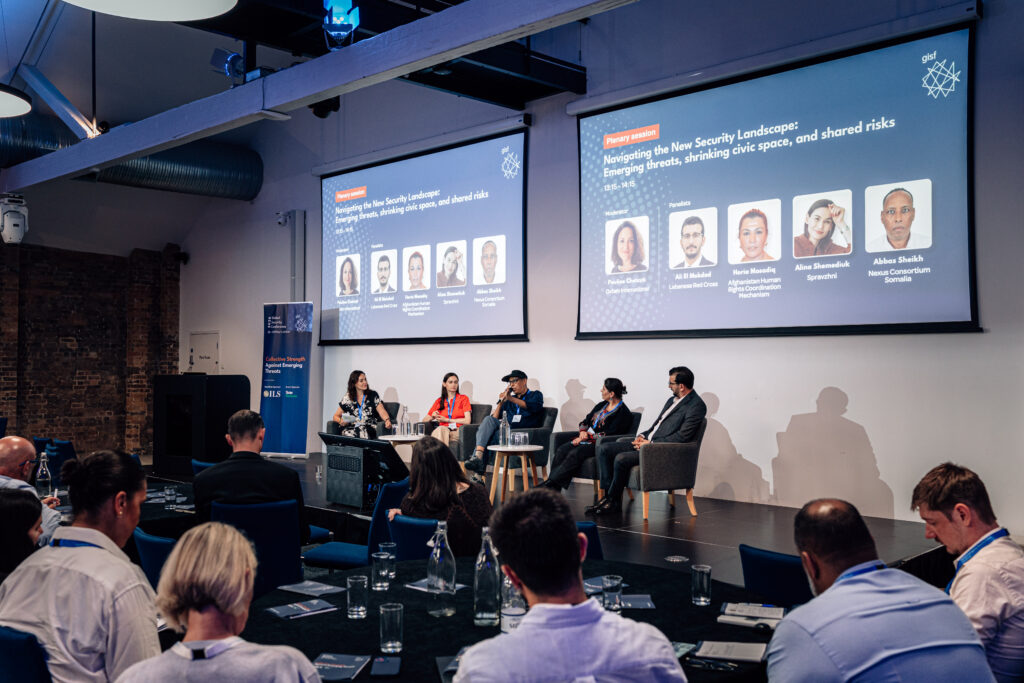
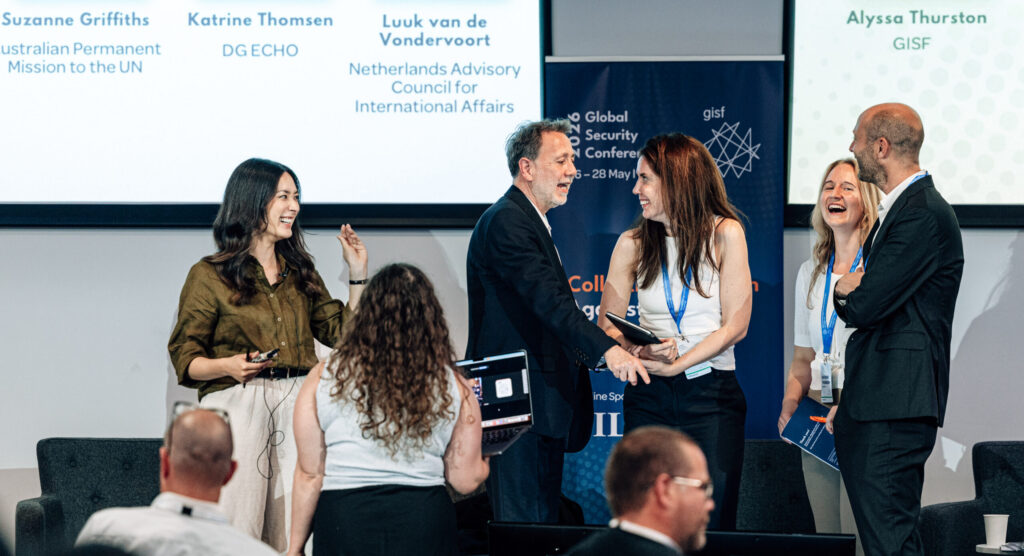
Collective Strength
We felt that a defining strength of the Conference was its ability to bring together our diverse and highly specialised community of practice. For many participants, it was an opportunity to expand the conversations beyond implementing organisations and engage with the broader community, all working towards the same objective of safer delivery of humanitarian aid. This fostered candid conversations and a sense of collective action. The sense of shared learning, leading to collective strength, was repeatedly cited as one of the event’s most valuable outcomes.
It was clear that by fostering dialogue across organisational and sectoral boundaries, the Conference helped participants to break down silos and common misconceptions that often limit the effectiveness of security risk management. Shared challenges, from targeted violence and arbitrary detention, to digital threats and misinformation, were explored not in isolation but through a collective lens that prioritised learning and mutual support, not only in the main plenary sessions, but in lively side conversations in the networking spaces.
“The sense of shared learning, leading to collective strength, was repeatedly cited as one of the event’s most valuable outcomes.”
Key Takeaways
For us, one of the strongest messages to emerge from the event was the convergence of risk across contexts and organisational types. Whether operating in conflict or post conflict environments, disaster-affected regions or politically restrictive settings, participants described facing increasingly similar threats.
This convergence presents both a challenge and an opportunity. While risks are intensifying, there is growing scope for shared data, harmonised standards, and interoperable security risk management systems. Sessions highlighted practical examples of collaboration, including joint incident analysis, shared crisis coordination, and collective engagement with donors on duty of care expectations.
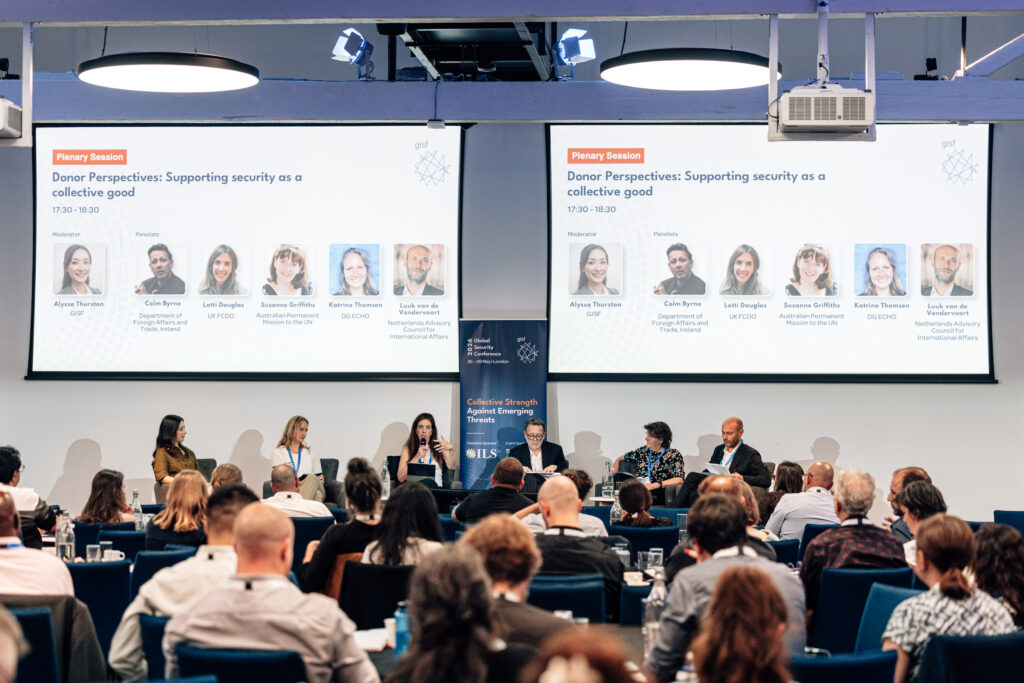
The Conference also highlighted meaningful opportunities for collective action, with donor engagement sessions underscoring a growing recognition that security is a collective good and a critical enabler of effective programming. We felt cautious optimism that this recognition could translate into more consistent and flexible support for security risk management.
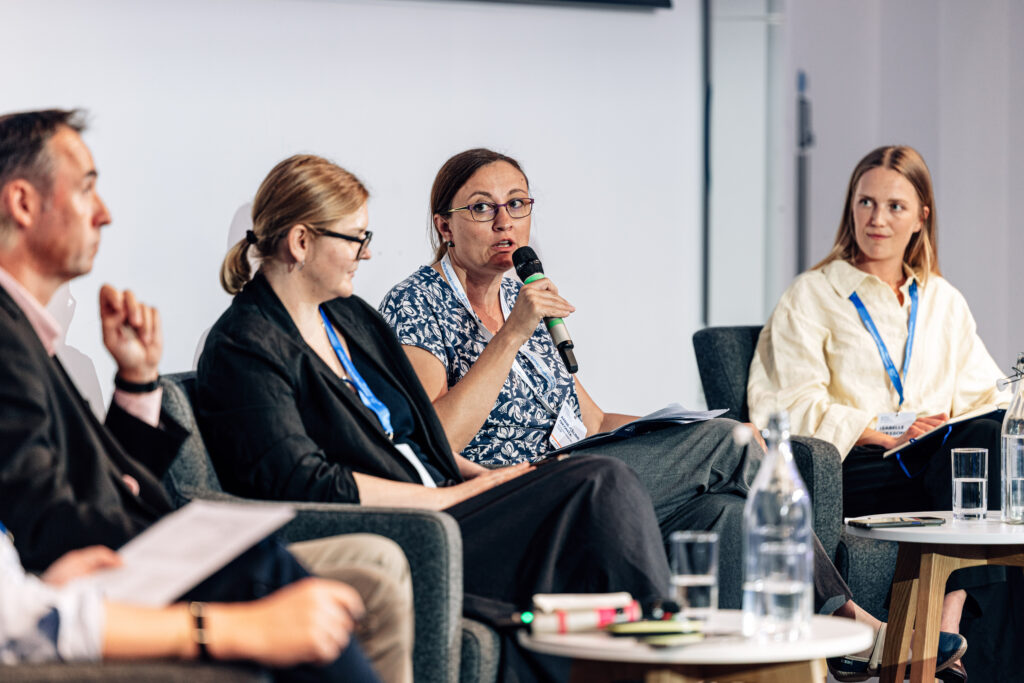
Innovation Grounded in Practice
Unsurprisingly, innovation featured prominently throughout the Conference and it was reassuring that speakers consistently emphasised the point that technology alone does not create safety. Effective innovation was framed as the thoughtful integration of tools, processes and people within robust security risk management frameworks.
Advances in real‑time monitoring, trained AI platforms, and communications & tracking technology were discussed as enablers of better decision‑making, particularly in fast‑moving crises. Equally important were conversations around data protection, ethics and organisational readiness, reinforcing the need for responsible implementation that is based on best practice standards
Private‑Sector Partnerships
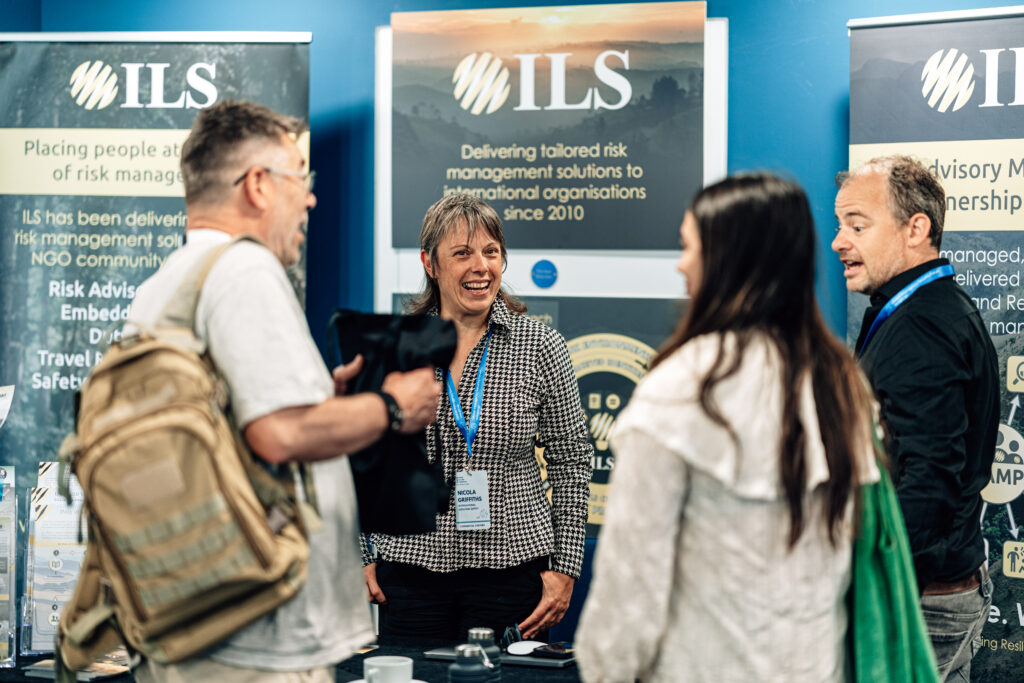
We joined discussions around private-sector engagement which reflected the maturing approach we have observed in recent years. Rather than viewing commercial partners solely as service providers, many participants described them as part of a broader security ecosystem and key partners.
Where the question of ethics and working with for-profit companies was raised, it was clear that as humanitarian actors do not, and cannot, work in isolation, collaboration with private companies are inevitable. The most appropriate solution to this concern focused on identifying private sector suppliers that align with organisational values, and are able to demonstrate ethical practices. Many examples were cited across the Conference of partnerships developing where shared values have aligned with organisational needs, leading to collaborations that have enhanced resilience by delivering specialist expertise, scalable and flexible systems, and surge capacity.
From our perspective at ILS, the conversations reinforced the importance of delivering services that are adaptable and grounded in both international standards and operational practice. Subtle but consistent references throughout the Conference pointed to the value of integrating suppliers to deliver, for example, risk advisory support, tailored training programmes and critical incident reviews, in order to release capacity of inhouse security and programme teams that are under more strain than ever.
“From our perspective at ILS, the conversations reinforced the importance of delivering services that are adaptable and grounded in both international standards and operational practice.”
Common Challenges
The Conference did not shy away from the structural challenges facing the sector. Financial constraints, increasing compliance demands, and the erosion of humanitarian space, were frequently cited as factors placing additional pressure on security functions.
Participants we spoke with also highlighted the increasing strain placed on security teams who are often asked to balance immediate operational demands with strategic policy and duty of care development, as well as training and capacity sharing with staff and local partners. This further reinforces the importance of scalable, proportionate approaches to risk management that can adapt to contextual changes without over burdening organisations.
The Group of Friends: Protecting Humanitarian Personnel
The work of the Group of Friends for the Declaration for the Protection of Humanitarian Personnel was a notable ‘special session’ at the 2026 Conference. Participants welcomed updates on renewed political momentum behind the UN Declaration, and the articulation of new pillars intended to translate commitment into action.
These pillars (1. Adherence (with IHL) 2. Access (safe, rapid and unhindered) 3. Alignment (of protections of international, national and local personnel) and 4. Accountability (justice when violations occur)) present the strongest example we have seen of high-level political action to protect aid workers by Member States. The Group of Friends, represented at GISF’s Conference by the Australian and UK governments, demonstrated their understanding of the realities faced by organisations operating in high-risk environments and emphasised their commitment to continue consulting with Humanitarian Security Risk Management practitioners as their work continues and is operationally implemented.
Looking Ahead: From Dialogue to Action
By the end of the Conference the prevailing sentiment was one of cautious determination. The challenges facing the sector are undeniable, but so too is the collective capacity to address them through collaboration, shared learning, and principled practice. By investing in interoperable systems and trusted partnerships, organisations can navigate uncertainty with greater confidence and resilience.
For us at ILS, the Conference reaffirmed the importance of networks like GISF, and private sector partners, like ourselves, supporting organisations, not just with tools, but with sector-wide insight, agility, experience and a commitment to shared values and continuous improvement. Numerous contributions throughout the programme highlighted how independent advice, evidence-based risk management, and practical incident support can enable organisations to meet their duty of care obligations, while maintaining access to the communities they serve in a sustainable and effective manner.
As the sector looks ahead, the key message from GISF’s Global Security Conference 2026 is clear: collective strength is not a slogan, but a strategic necessity. By working together across organisational and sectoral boundaries, we can better anticipate emerging threats, adapt to change, and protect the people at the heart of humanitarian action.
Related:
Collective Strength Under Pressure: A perspective from Afghanistan
We spoke to a human rights coordination organisation about the risks faced by the civil society community in Afghanistan.
Protecting Lawyers and the Rule of Law
James Blake and Azam Hawari (ClientEarth) discuss the unique risks faced by lawyers seeking to protect the rule of law, and steps that organisations can take to mitigate these risks.
From Bold Steps to Better Decisions: Risk literacy for leadership in turbulent times
Dr Sean Denson and Marieke van Weerden draw on insights from their recent research paper and discussions at the 2025 Brussels Forum to explore how the aid sector can move towards a more mature model of risk leadership.