Context
Recent years have seen exceptionally high levels of violence against aid workers. This includes violence perpetrated by state actors, alongside a wider erosion of protections for humanitarian action as consensus weakens, access narrows, and risk shifts onto humanitarian actors.
Acceptance has long been described as the foundational pillar of humanitarian security risk management. However, in this rapidly changing environment, the traditional acceptance framework seems to be less able to do the work it was designed to do.
Content
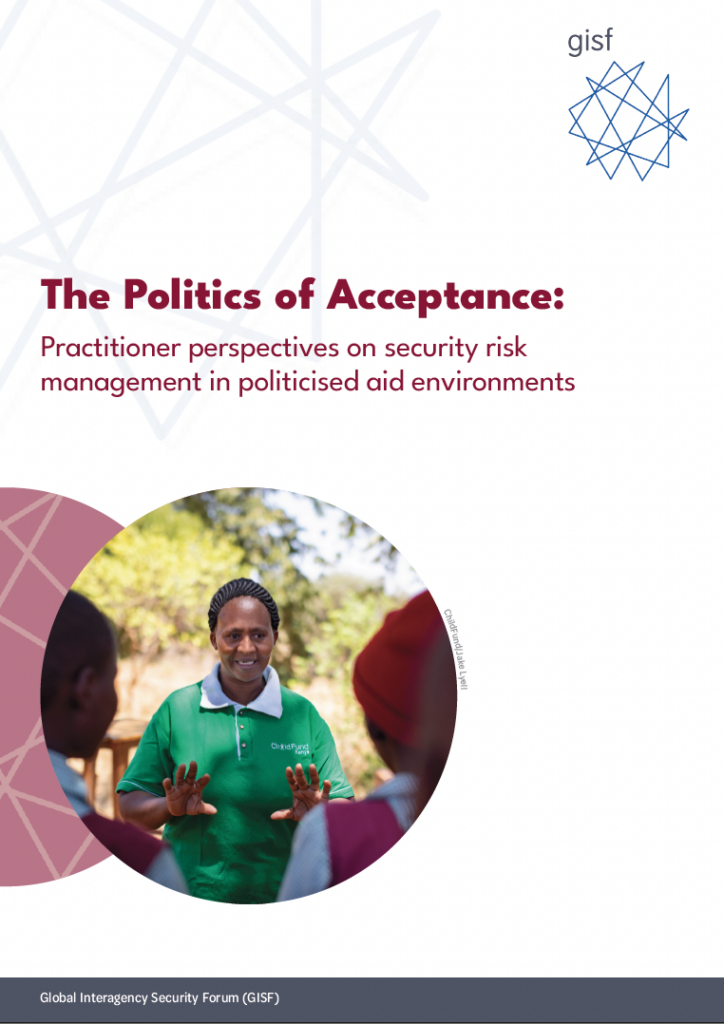
Drawing on interviews with 20 senior practitioners and a targeted literature review, this paper explores how politicised environments reshape the conditions under which acceptance can be built, maintained, and lost, and how practitioners are responding.
It finds that acceptance in these settings has become weaker, more conditional, and more vulnerable to wider political dynamics that no single organisation can control. In response, the paper sets out practical pathways for how organisations and the wider sector can adapt their acceptance strategies to environments where the traditional framework is no longer fit for purpose.
This paper is aimed primarily at NGO practitioners and decision-makers involved in SRM, access, programme delivery, and partnership management, while also speaking to staff in other NGO functions, UN agencies, institutional donors, and researchers engaged in this space.
Structure
Section 1 introduces the paper.
Section 2 traces the changing political dynamics affecting global aid.
Section 3 unpacks the concept of acceptance, its core components, challenges, and layered audiences.
Section 4 examines the relationship between humanitarian principles and acceptance, and how practitioners navigate the gap when principled action no longer generates the trust the traditional framework assumes.
Section 5 explores how politicised environments reshape the conditions under which acceptance is pursued, from navigating powerbrokers to digital narratives and the politics of organisational identity.
Section 6 looks at how acceptance erodes in practice, including the role of programme design, staff conduct, and internal organisational dynamics.
Section 7 considers the collective dimension: reputational spillover, coordination, and the role of partnerships with national actors and the risks they pose.
Section 8 concludes with practical pathways for strengthening acceptance under current conditions.
Download the research paper using the yellow button on the left.